Table Of Content

Calgary and Vancouver have embarked upon an urban experiment in creating a super-dense downtown. While the province of Alberta focused on a cluster surrounded by low-density housing, the major city in western Canada developed a concentrated residential downtown. In either configuration, both towers are models to approach urban design from a mixture of housing and working spaces addressing the community's desire for a genuinely sustainable and vibrant urban development. The 30 m separation from the bridge was defined as a minimum distance until the building reached 30 m up in the air, after which it could grow back out, allowing BIG to double the floor plate.
27 firefighters battling Vancouver house fire - Fox 12 Oregon
27 firefighters battling Vancouver house fire.
Posted: Sun, 03 Mar 2024 08:00:00 GMT [source]
Vancouver receives $1M grant to make energy efficient upgrades to VHA housing
Ft. of ground-level retail and restaurant space, namely London Drugs, Fresh St. Market grocery store, and Momofuku Noodle Bar. The pixelated facade, also characteristic of Ingels’ work, helps to create deep-set balconies for residents in the 493-foot-tall tower. Deriving its name from the Canadian city it's located in, Vancouver House is situated on a very small plot in a built-up area that is hemmed-in by other buildings, a river, and a bridge. The project targets both LEED Platinum and LEED Certification for Neighborhood Development. Each façade uses high-performance, triple-glazed insulating units and all balconies are fully insulated at the top, bottom and slab edges. For an expensive building, its downslope side-street entry has all the ambience of a service door.
West Coast Style
The “darker” panels within the carve are the same material with an additional titanium oxide coating. And the development that has kicked off this architectural renaissance in the city is undoubtedly Vancouver House, recognized by CNN this week as one of 10 most anticipated buildings set to shape the world in 2020. Completed in 2020 but recently photographed, the building has a twisted form that derives from its wedge-shaped site alongside the ramps leading to Granville bridge in the city's downtown. Vancouver House will be built at 1480 Howe Street at the northeast corner of Beach Avenue and Howe Street in Downtown Vancouver. Old Yaletown is a 5 minute walk away and George Wainborne Park and the Aquabus to Granville Island and beyond are both a 2 minute walk away.
Eight home interiors where mezzanines maximise usable space

The building’s robustness is obvious if you study the drawings, but its structural complexity is otherwise suppressed. This incongruity between what the building is saying, versus how it says it, is a theme that runs through the project, with uneven but ultimately satisfying results. As Vancouver matures, developers are giving its empty and oddball sites a second look. Downtown land is expensive, typically making up more than a quarter of a project’s costs. Combined with Vancouver’s hefty taxes and levies, more than half of a development’s proceeds are usually spent before construction starts. The most remarkable view of the recently completed Vancouver House is from Granville Bridge, where an eviscerated façade curves away from the bridge like a screen shot from a video game.
Notable architects
Acquired over the past decade, the value of the land sits at $4 billion, according to Brennan Cook, vice president of the MST Development Corporation, the real-estate company representing the three First Nations. Like the US, Canada is facing a severe housing affordability crisis, in large part driven by a shortage of homes — and Vancouver has some of the highest housing costs in the country. These projects represent major strides in addressing disproportionate housing burdens on Canada's Indigenous communities, as Business Insider recently reported, as well as efforts to build generational wealth for tribe members. A noticeable feature of Vancouver's strong connection to nature is the Seawall, a man-made, car-free pathway which stretches around the downtown peninsula along the waterfront.
The 2010 Olympic Games spurred new construction and revitalization of sporting venues and support facilities, including the Athletes Village, throughout the Greater Vancouver region and Whistler. Vancouver's reputation as the City of Glass began to emerge during this period. The temperate climate with less-harsh sun makes having large walls of non-heat and sun-reflecting glass feasible. The rain is an impetus for pedestrian shelter, but not shade, which has led to extensive use of glass canopies over sidewalks along pedestrian shopping streets.
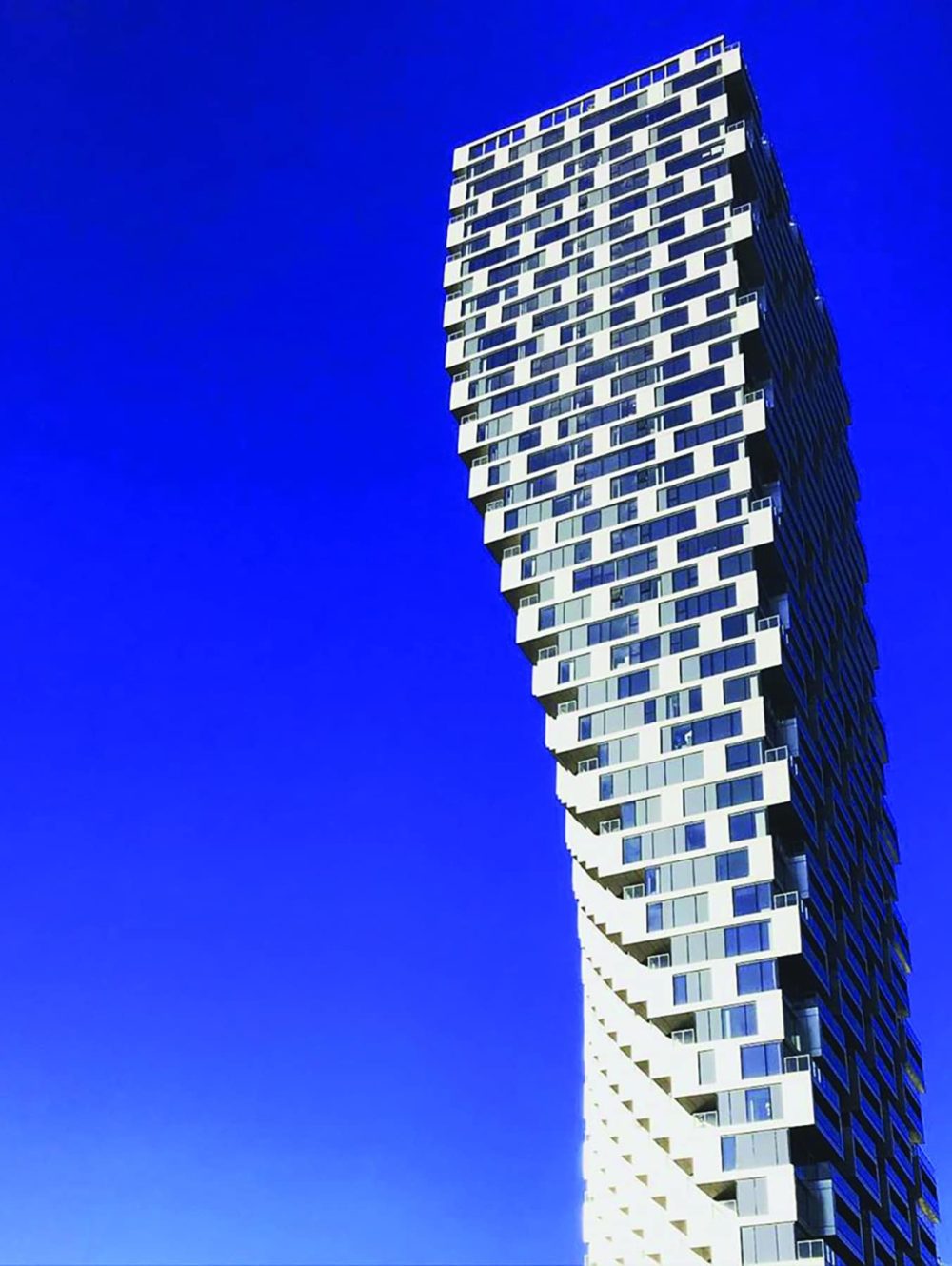
The airport’s latest planned opening date, after expensive renovations and repairs, is sometime in Fall 2020. In Dubai, the pavilion representing the city state of Singapore at Expo 2020 has been recognized for its showcase of dense urban greenery and energy-neutral design. Twisting from a triangular base to a rectangular top, Vancouver House appears to defy the laws of engineering when viewed from afar.
In the 1960s, a movement emerged to preserve Gastown's distinctive and historic architecture in the face of plans to demolish it, along with nearby Chinatown, Japantown, and Strathcona, to build a major freeway. In 1971 the provincial government declared Gastown a historical site, protecting its heritage buildings. Yaletown underwent a similar transformation of its early 20th century warehouse and low-rise office buildings in the 1990s and early 2000s. More recently condominiums and social housing have moved into these districts in both renovated historic buildings and in new construction. Vancouver House is part of a new phase in Vancouver ’s short but extremely successful history of urban policy.
Those courts, and the steps and paths that thread through them, introduce an almost European, village-scale experience, completing the project’s span of scales from urban to intimate. Located at the foot of the eight-lane Granville Street Bridge, one of three main gateways to the city center, the site is trisected by the fork of the bridge’s elevated ramps. A mandatory 98-foot setback from the traffic pares even the largest parcel down to a triangular footprint that’s too small for the money to work. “Those difficult places are really the ones that have the greatest potential to force creativity and invention,” says Ingels. In a solution negotiated with the city, the design interprets the setback requirement not straight-up, but as a radius.
The tower is located at the main entrance to Vancouver, next to the Granville bridge and a neighboring park, meaning several urban constraints- setbacks on the lot. The 30-meter separation from the bridge was defined as the bare-minimum distance until the building reached 30 meters up in the air, after which it could grow back out - allowing BIG to double the floor plate. As a result, Vancouver House emerges subtly from the ground and expands as it rises, granting visual access to the breadth of Vancouver's natural surroundings.
A diverse digital database that acts as a valuable guide in gaining insight and information about a product directly from the manufacturer, and serves as a rich reference point in developing a project or scheme. But Cheng had heard Danish architect Bjarke Ingels speak in Vancouver in 2010, and was impressed with Ingels’ approach. Cheng suggested that Westbank let Bjarke Ingels Group (BIG) have a go at the site. DIALOG’s Vancouver office, which was already working with Westbank on another project, teamed up with BIG.


No comments:
Post a Comment